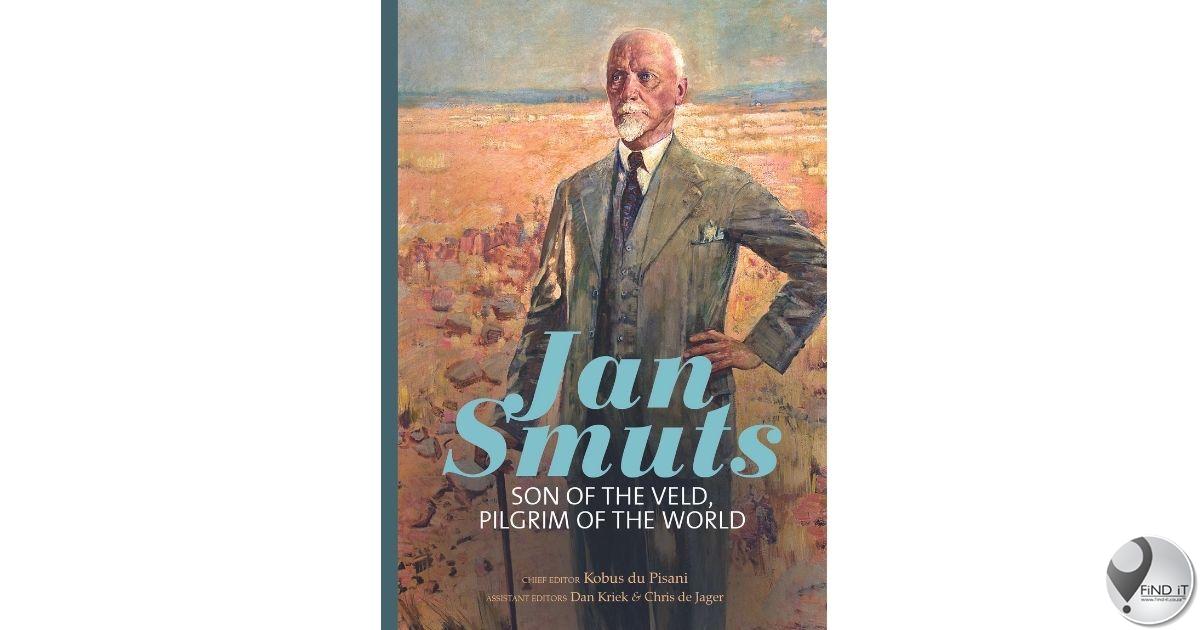

Protea Boekhuis publishes Jan Smuts: Son of the veld, pilgrim of the world.
As a lover of history (albeit not an expert) I enjoyed reading this 600 page seminal work reappraising the life of Jan Smuts, a statesman, soldier, philosopher and naturalist, written by a total of 17 historians under the chief editorship of Prof Kobus du Pisanie, a professor of history at the Potchefstroom Campus of the North-West University. The Research Focus Area of Social Transformation at the NWU under Prof. André Duvenage, provided infrastructure and support for the project that, back in 2013, was the brainchild of Dan Kriek and Chris de Jager.
I found the chapters interesting and thought-provoking. The hard cover book consists of an introduction, four sections with various chapters (Section A: Smuts’s Contributions to Science; Section B: The Military Smuts: Commander in Three Wars; Section C: Smuts the Politician; and Section D: Smuts the Statesman) as well as a conclusion. In the middle, there is a gripping black and white photo section of 24 pages that also held my attention. I agree with what Adriaan Basson, editor of Beeld, wrote in an article (mentioned in the Foreword) dated 18 October 2014: “Is it not time to dust off our Afrikaans role models?” The he stated: “Yes, the stain of apartheid will no doubt linger for a long time, but this does not mean we cannot be proud in equal measures of our Afrikaans role models and celebrate them.” In his opinion the time was ripe to tell the “full story” of the Afrikaners.
According to the publisher, “the purpose of the book, written almost three generations after his death, is to recall and re-evaluate Smuts’s contributions in various fields and in this way introduce him to the younger generation. It is important that Smuts be judged in the context of his particular time and circumstances. As far as his outlook on war and peace, civilization, race and class differences, the capitalist system and South Africa’s place in the wider world are concerned, Smuts was certainly a product of his time. It would be unfair to measure him and his contemporaries against today’s norms and values. To do justice to him, his supporters, as well as his opponents and critics, due consideration should be accorded to how they lived, thought and reasoned in that era.”
Text on the back cover: Jan Smuts remains a controversial figure. Was he one of the outstanding statesmen of his time or was he perhaps a traitor of Afrikaner interests and possibly a racist? Like Paul Kruger at the end of the 19thcentury, and Nelson Mandela as the 20th century drew to a close, Smuts was a leader of extraordinary stature and his statesmanship is recognized internationally. And yet, the NP and ANC governments have downplayed his contributions for decades because his views did not support their Afrikaner and black nationalist versions of South African history. There are still strong opinions on Smuts’s role in our history, but today, a few generations later, we have a better perspective on his contributions within the historical context of his time. In this reappraisal unanswered questions about Smuts’s political and racial policies are scrutinized and his life and thoughts are analyzed and evaluated by experts according to earlier and more recent theories.
Get your copy of Jan Smuts: Son of the veld, pilgrim of the world here.