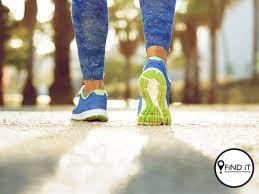

We all know that walking is great for overall health, but does it make a difference on the
scales? “If you’re walking at a light pace of around 4km/h, it’s not very effective,” says
personal trainer Adrian Migani. “But if you walk at a brisk pace of 6.5km/h, you could burn around 1,100 kilojoules in 60 minutes.” We like the sound of that! Start your walking workout today!
As well as decreasing the risk of osteoporosis, type 2 diabetes and stroke, walking lowers
cortisol, the stress hormone that’s linked to weight gain. “Walking is a great low impact, low-
intensity option which helps with kilojoule expenditure and stress management,” says Better
Being trainer Greg Stark (betterbeing. com.au). Walking places less stress on your joints
than running, so you’re less likely to injure yourself, making it an excellent option for
beginners and exercise-phobes alike.
Every little step
Walking is much more than the lazy person’s answer to running – there’s a specific
technique. Firstly, have your heel hit the ground first. Your stride length will come naturally,
becoming longer as you travel faster. With your elbows at 90 degrees, move your arms in
conjunction with your legs to maintain pace.
While walking, you should maintain good posture. Fit Space trainer Gretchen Masters
(fitspacetraining.com.au) advises, “Keep your eyes on the horizon, shoulders down and
back, stomach in and butt strong.”
Harder, better, faster, stronger
The key to an effective walking workout
The key to an effective walking workout is adding intervals of increased intensity. Migani
recommends setting targets for your walk, for example using traffic lights as checkpoints.
“Once you reach one goal, set another. Every time you achieve a goal, you’ll feel mentally
stronger.”
Try to walk at least three times a week. Start at 30 minutes of moderate and brisk walking
and work your way up to 60 minutes. To monitor intensity, Masters recommends the talk
test. “For long walks, you should be able to hold a conversation. For medium walks, you
should be able to talk, but might be breathless going up a hill. For short, brisk walks, you
should only be able to talk in short bursts.” Stay motivated by walking with a friend or
cranking your fave tunes.
Let’s get physical
Why don’t you give Migani’s 30-minute walking plan a go during your lunch break?
Walk at a moderate pace for 3 minutes
Brisk walk for 2 minutes
Do 10 dips and 10 incline push-ups
Brisk walk for 1 minute, then at a moderate pace for 15 seconds (repeat 5 times)
Perform 10 crunches
Brisk walk for 2 minutes then perform 10 walking lunges (repeat 3 times)
Stretch all worked muscles for no less than 4 minutes After you’re done, eat a light meal
packed with wholegrains and lean protein.
“Walking is a great low-impact option which helps with kilojoule expenditure and stress
levels.”
Also read: Trump’s refusal to concede election loss an ’embarrassment’