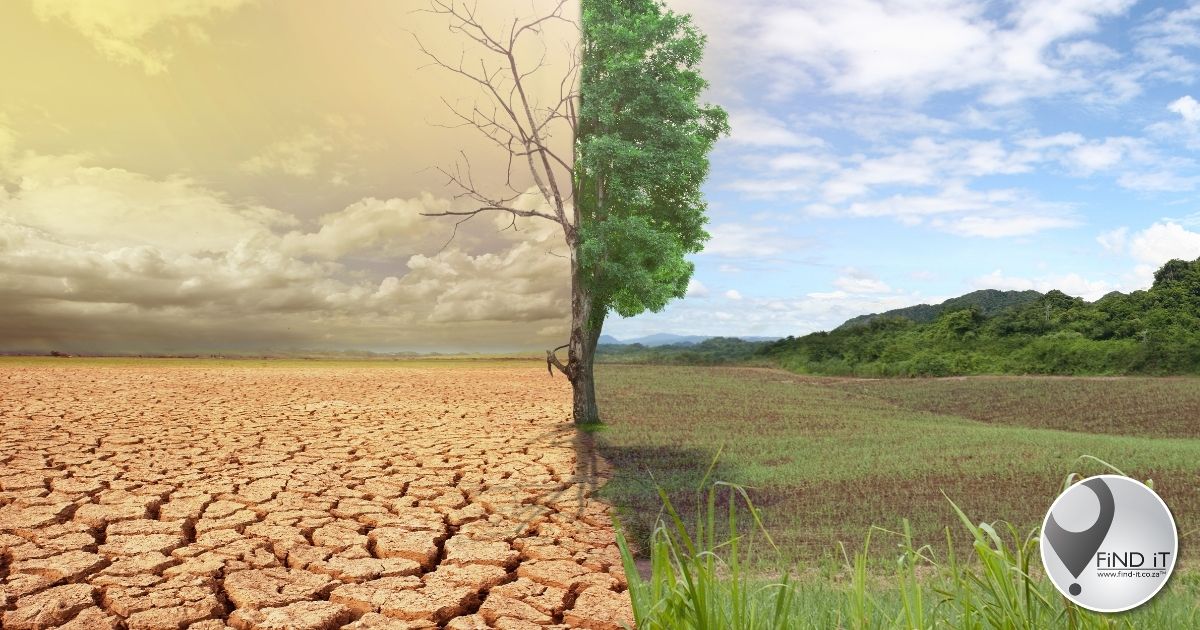

Climatologists have issued dire warnings concerning the impact of global warming and rising global temperatures on South Africa which is growing increasingly hot and dry.
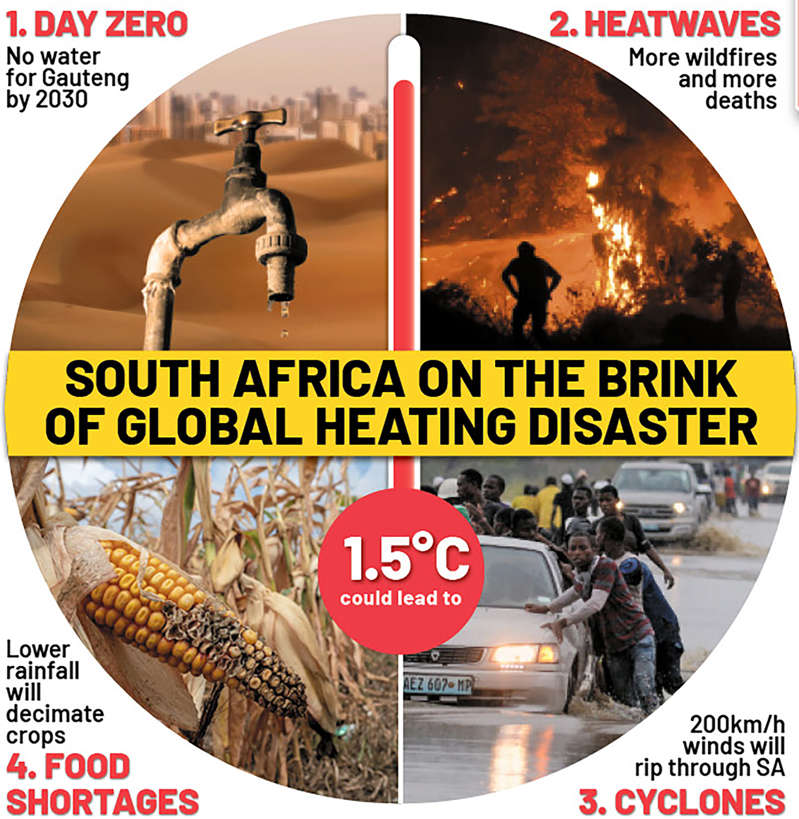
A recent assessment done by climatologists at the Global Change Institute (GCI), at the University of the Witwatersrand, indicates an increasing likelihood that the taps in Gauteng are going to run dry in 2030s or the 2040s if global warming continues unabated. It was also found that Gauteng is increasingly likely to experience a “Day Zero” in the next ten years – however the taps running dry in the economic heartland is not the only major risk faced by South Africa as the planet’s temperature rises.
Food security is also in danger, with the maize and cattle industry collapsing due to the drought, the formation of tropical cyclones in Richards Bay (as experienced in Mozambique) and severe heatwaves that could result in the death of many.
The assessment done by the scientists at the GCI is consistent with the recent Working Group 1 report of the Intergovernmental Panel on Climate Change (IPCC), which shows that the combination of accelerated drying and warming trends across South Africa is increasing the potential for acute water shortages which will set off a devastating series of events that will pummel human health and security.
Thandile Chinyavanhu, Climate and Energy Campaigner at Greenpeace Africa, had this to say about the potential Day Zero: “it is not a difficult scenario to envision at the current rate of emissions. A future characterised by prolonged drought, ecological degradation and cyclones, is not conducive to our health or survival. We are likely to see people succumb to the impacts of these extreme weather events, communicable diseases such as malaria will thrive, and climate shocks will lead to mass job losses across industries such as agriculture, manufacturing, which will erode social justice. We need a just transition away from fossil fuels toward renewable energy now.It’s important that South Africans know that the drastic changes in climate we are experiencing are unequivocally linked to human activity and that 70% of the world’s emissions released between 1988 and 2015 were emitted by just 100 companies. Among these carbon majors features South African petro-chemical company, Sasol. South Africa is not a passive actor in this climate crisis but is complicit in enabling the fossil fuel industry’s decimation [of the planet].”
She continued that “South African authorities have the scientific basis to influence their decision-making at COP26; they need to prioritise setting emission reduction targets that are aligned to what is required by science. We cannot afford the luxury of gradualism; we must commit to doing everything in our power, faster and bolder, at all levels, leaving no sector behind.”
Sources: MSN
Follow FiND iT on Facebook here.
ALSO READ: Algeria forest fires: Dozens killed in Kabylie region