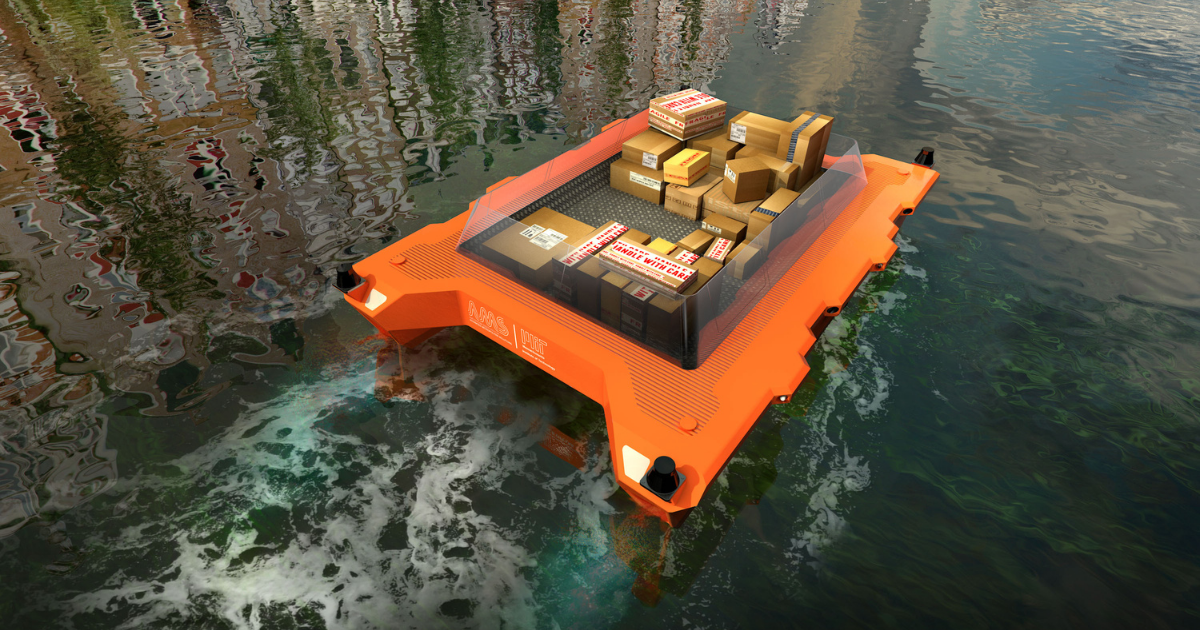

Amsterdam is to trial self-driving electric boats to carry out tasks such as collecting rubbish and transporting passengers. Designed and created by the Amsterdam Institute for Advanced Metropolitan Solutions and the Massachusetts Institute of Technology, Roboat is a five-year research project that aims to produce the world’s first fleet of autonomous electric boats for the Dutch capital.
Amsterdam’s 60 miles of canals have been used for transport since long before cars and trucks powered by polluting internal combustion engines began clogging its narrow roads. With a top speed of 4mph, Roboats move using propellers and thrusters which are powered by an electric battery which can run for up to 24 hours before being charged.
They are steered remotely by a computer, which processes data from cameras and sensors that scan the areas around the vessel, detecting stationary and moving objects. The vessels are modular so they can be easily adapted for different purposes, carrying cargo or workers.
Developers say they still need two-to-four years to perfect the self-steering technology. “It’s mostly because we want to be absolutely sure that we can navigate safely in the canals,” said the mechatronics engineer Rens Doornbusch.
“Right now we have the autonomy in place, but one of the next steps is to make sure that we can actually handle any kind of situation that we might encounter in the canals.”
Trials are already taking place at Marineterrein Amsterdam, while the Amsterdam Institute are also are actively working with the ministries and the legislators to iron out any legal and privacy aspects, with Roboat confident the way it uses the data from the cameras has been developed in such a way that it doesn’t identify any persons.
ALSO READ: Floral Designers Surprise Londoners With A Series Of Secret ‘Flower Flashes’